Flat Clearance Southgate — Health & Safety Policy
 This Health and Safety policy sets out the commitments of Flat Clearance Southgate to protect the health, safety and welfare of employees, contractors and the public while providing professional flat and property clearance and rubbish removal services. The purpose of this policy is to communicate our approach to risk management across the waste clearance and rubbish disposal service area, ensuring that hazards are identified, assessed and controlled so that operations are carried out safely and with due regard to legal and industry expectations.
Our core principles are to prevent injury and ill health, to reduce environmental harm, and to continuously improve safety performance. Flat Clearance Southgate adopts a systematic approach to safe working: documented procedures, regular risk assessments, and a programme of training and supervision tailored to rubbish collection, waste transfer, and salvage activities. All staff must understand and follow the controls that apply to their duties.
 Responsibilities are allocated so that the accountable manager retains overall responsibility for health and safety, while supervisors and team leaders manage day-to-day implementation. Employees are expected to work safely, report unsafe conditions, and co-operate with safety monitoring. Visitors and contractors must comply with site rules. This policy applies across our clearance and waste removal service area and is regularly reviewed to reflect operational changes.
Risk Assessment, Controls and Safe Systems of Work
All clearance jobs receive a pre-start risk assessment to identify hazards specific to the property and the load. Assessments cover manual handling, slips, trips, falls, sharps, hazardous materials and vehicle movements. Where risks cannot be eliminated they are reduced through controls such as mechanical aids, two-person lifts, containment of sharps, and segregation of hazardous waste for specialist disposal. These measures are essential for safe rubbish removal operations across our service area.
 Personal protective equipment (PPE) is provided where needed and includes gloves, eye protection, high-visibility clothing, protective footwear and respiratory protection for dusty or contaminated environments. PPE is considered the final line of defence after eliminating risks and applying engineering and administrative controls. Staff are trained in correct selection, use and maintenance of PPE to ensure effectiveness.
Contractors and temporary workers engaged to support clearances must satisfy our pre-qualification standards and follow our safety procedures. Contractor coordination ensures that work is planned to minimise overlaps with other activities and that responsibilities for waste segregation and hazardous materials are clear before work starts.
Training, Competence and Manual Handling
We provide induction and refresher training covering: safe lifting techniques, manual handling risk reduction, vehicle loading and securement, use of mechanical aids, traffic management around collection points, and procedures for dealing with asbestos, chemicals or biological contamination. Training records are maintained and competence is assessed periodically to ensure the team can safely deliver rubbish clearance and related waste services.
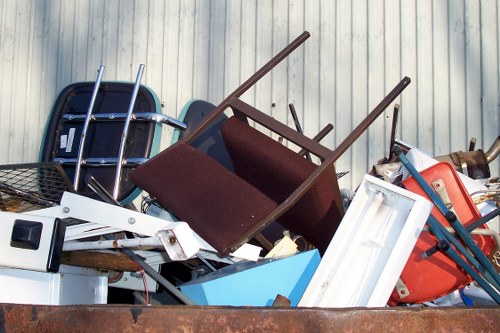 Safe manual handling practices and ergonomic awareness reduce musculoskeletal injuries. Our policy emphasises task planning, mechanical assistance for heavy items, and team lifts when required. Supervisors must enforce correct lifting techniques and rotate tasks to limit repetitive strain in high-frequency waste clearance environments.
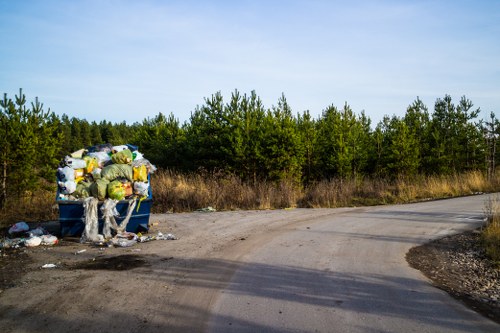 Vehicles used for collection and disposal are inspected daily and maintained to a standard that ensures safe operation. Drivers receive training in vehicle loading, securing loads, safe reversing, and incident reporting. Vehicle safety contributes directly to safe rubbish transportation and the protection of staff and public across the service region.
Hazardous waste and potentially contaminated items are identified and isolated. This includes batteries, solvents, paints, asbestos-containing materials and medical waste. Such materials are handled only by trained personnel and, where necessary, disposed of through licensed hazardous waste contractors. We maintain clear segregation procedures to avoid cross-contamination and to comply with hazardous waste requirements within our waste collection area.
Incident reporting, investigation and corrective action are integral to our safety culture. All incidents, near-misses and unsafe conditions must be reported immediately. Investigations focus on root causes and implement remedial actions to prevent recurrence. Lessons learned are shared with staff to drive continual improvement in safety performance across the rubbish removal service area.
We maintain an emergency response plan for fire, spillage, severe injury and hazardous material discovery. The plan includes immediate actions, evacuation procedures, first aid arrangements and liaison with emergency services. Regular drills and reviews ensure readiness and effective response should an emergency arise during clearance activities.
Monitoring and review are conducted through inspections, audits and safety performance metrics. Key performance indicators include incident frequency, training completion rates and audit findings. Management reviews the policy annually or when significant changes occur in operations, equipment, or regulatory requirements. The review process ensures the policy remains relevant to our evolving waste clearance and rubbish disposal operations.
To support safe service delivery, we publish clear work instructions and maintain a culture of communication. Employees are encouraged to contribute suggestions for safety improvements and are protected from reprisals when raising concerns. Our leadership demonstrates commitment through resource allocation, oversight and visible engagement with frontline teams.
In summary, Flat Clearance Southgate is committed to delivering safe, efficient and compliant rubbish collection and property clearance services. This policy outlines responsibilities, controls and systems designed to protect people and the environment across our waste removal service area. The policy is supported by training, inspections, emergency planning and a proactive approach to hazard reduction.
- Key elements: risk assessment, PPE, training, vehicle safety and hazardous waste management.
- Commitment: continuous improvement and compliance with applicable health and safety standards.
- Expectation: active participation by all staff to maintain a safe working environment.