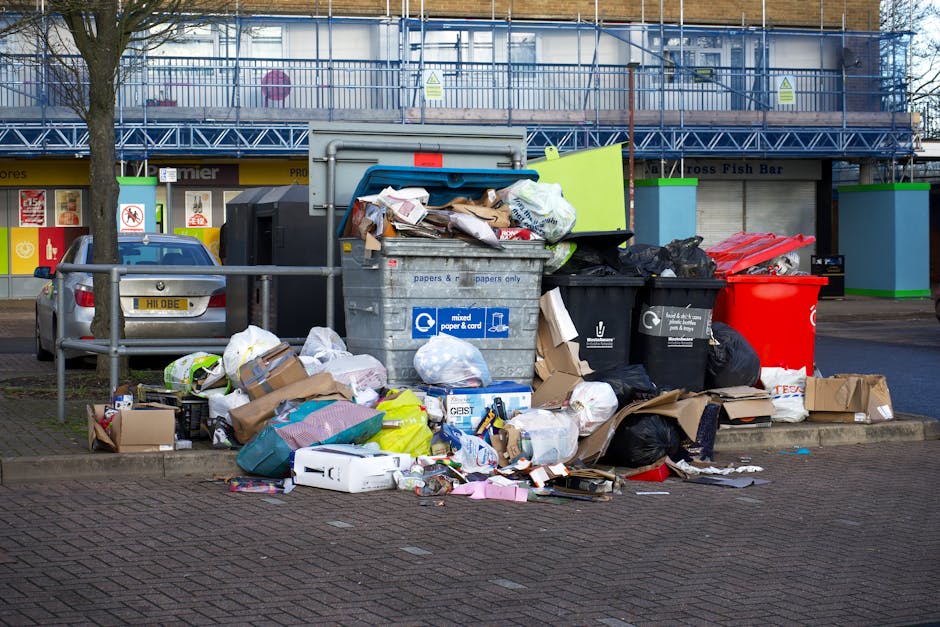
Avoid hidden rubbish removal charges in Southgate Enfield
If you have ever booked rubbish removal and then stared at the final invoice thinking, "Where did that extra charge come from?", you are not alone. Hidden costs can turn a simple clearance job into an annoying, expensive mess. This guide on how to avoid hidden rubbish removal charges in Southgate Enfield shows you exactly what to look for, what to ask, and how to compare quotes without getting caught out.
Whether you are clearing a flat, emptying a garage, getting rid of old furniture, or dealing with a bigger household clearance, the same lesson applies: the cheapest quote is not always the cheapest service. A proper, transparent price should make sense from the start, not halfway through the job when the van is already outside your house.
Let's be honest, nobody enjoys discussing waste disposal line by line. But a few minutes of checking now can save a very awkward phone call later. And if you are planning a local clearance in Southgate or Enfield, the best approach is simple: know what is included, confirm the awkward bits, and keep everything in writing.
Table of Contents
- Why this matters
- How rubbish removal pricing usually works
- Key benefits of transparent pricing
- Who this is for
- Step-by-step guidance
- Expert tips
- Common mistakes to avoid
- Tools, resources and recommendations
- Law, compliance and best practice
- Options and comparison
- Real-world example
- Practical checklist
- Conclusion
- Frequently asked questions
Why Avoid hidden rubbish removal charges in Southgate Enfield Matters
Hidden charges are not just a budgeting problem. They create stress, waste time, and can leave you feeling pressured into approving extras you never intended to pay. In practice, the issue often appears in small ways first: a "call-out fee" that was not mentioned, a higher price because waste was "harder to access", or a surprise surcharge for items that should have been discussed before the van turned up.
In Southgate and the wider Enfield area, many people need rubbish removal at short notice. Flats, terraced houses, conversions, and busy high streets all bring access challenges. That is precisely why transparency matters. If a company understands the job properly, it can quote properly. If it cannot, you are taking on the risk.
There is also a trust factor. A clear quote tells you the provider knows the work, understands the load, and respects your time. A vague quote does the opposite. To be fair, a lot of rubbish removal jobs are straightforward. But the tricky ones are the ones where hidden fees creep in: stairs, parking restrictions, extra labour, bulky items, appliance disposal, or mixed waste. That is where good communication makes all the difference.
Expert summary: The simplest way to avoid unexpected rubbish removal costs is to get a detailed quote, describe everything accurately, and confirm what happens if the load changes on the day. If it is not written down, assume it is not included.
And yes, sometimes the smallest overlooked detail is the one that costs the most. A heavy old wardrobe. A fridge freezer. A garden pile that looks tiny until it is lifted. Funny how that works.
How Avoid hidden rubbish removal charges in Southgate Enfield Works
Transparent rubbish removal pricing usually starts with a description of the waste, the access conditions, and the service level. In a good setup, the provider asks sensible questions before giving a price. How much waste is there? Is it loose, bagged, or bulky? Is it on a ground floor, up stairs, or in a loft? Is parking easy? Are there any restricted items?
That information matters because rubbish removal is rarely just about volume. Labour, vehicle space, sorting, and disposal requirements all influence the final figure. For example, two jobs that look similar from the street can have very different costs if one involves carrying items down several flights of stairs or handling mixed materials that need separate processing.
It also helps to understand the difference between estimates and fixed quotes. A realistic estimate gives you a working figure based on the information provided. A fixed quote should be more specific, usually because the provider has enough detail to stand behind it. If you are comparing providers, ask which one you are getting. It sounds obvious, but people skip this all the time.
Another thing: some charges are legitimate, but they should still be explained. For instance, appliance removal, mattress disposal, bulky furniture, or non-standard waste streams may affect costs. If you need specialist handling, that should be discussed openly. You should never have to guess whether the price includes the item you actually need removed.
If you are clearing a home, home clearance and house clearance services are often priced by a mix of volume and labour. For smaller jobs, such as a few pieces of old furniture, services like furniture disposal or furniture clearance may be more suitable and easier to price accurately.
Key Benefits and Practical Advantages
When pricing is transparent, the benefits go beyond avoiding a nasty surprise. You get better planning, better timing, and a smoother handover on the day. That is particularly useful when you are juggling a move, refurbishment, tenant changeover, office clean-up, or a family clear-out.
- Clear budgeting: You know what the job is likely to cost before you commit.
- Less stress: No awkward back-and-forth when the work is already underway.
- Faster decisions: You can compare providers on a like-for-like basis.
- Better service fit: You can choose the right clearance type for your situation.
- Lower risk of disputes: Written details reduce misunderstandings.
There is also a practical angle that gets missed. When a company is transparent about pricing, it is often more transparent about what it can and cannot take. That matters for items like fridges, mattresses, builders' rubble, or potentially hazardous waste. If you are booking a job that includes awkward items, a clear scope is a sign of professionalism, not fussiness.
For example, if your clear-out includes an old sofa and a broken appliance, you may need a service that covers both items properly, rather than assuming every load is treated the same. In that case, it may help to look at mattress and sofa disposal or fridge and appliance removal so you can match the service to the waste.
And truth be told, a transparent provider usually saves you time as well. No chasing, no confusion, no "we'll just see on the day". That phrase is fine for weather forecasts, not so great for invoices.
Who This Is For and When It Makes Sense
This topic is relevant to almost anyone arranging waste collection in Southgate Enfield, but some people are more exposed to hidden fees than others. If you recognise yourself in any of the examples below, it is worth being extra careful.
- Homeowners clearing out a loft, garage, or spare room
- Tenants moving out and needing a quick flat clearance
- Landlords or letting agents preparing a property between occupiers
- People disposing of bulky furniture or appliances
- Small businesses clearing office waste or archived materials
- Builders and tradespeople with leftover renovation waste
- Anyone booking a same-day or next-day removal and feeling rushed
If you are doing a full property clear-out, the pricing question becomes even more important. A flat clearance can be straightforward, but only if the company knows how many rooms are involved, whether there is lift access, and whether items need to be dismantled. A loft clearance or garage clearance can look cheap at first glance and then become more expensive if access is awkward or the contents are heavier than expected.
It also makes sense if you are dealing with mixed waste. A load of garden clippings is not the same as a pile of broken tiles, and a pile of office paperwork is not the same as a sofa and a washing machine. If the provider is vague about what is included, pause. Ask. A few extra questions now are cheaper than one big surprise later.
Step-by-Step Guidance
Here is the simplest practical way to protect yourself from hidden rubbish removal charges. It is not complicated, but it does work.
- List everything you want removed. Be specific. Don't just say "household waste". Say what it is: bags, furniture, appliance, cardboard, garden waste, builders' debris, and so on.
- Describe access honestly. Mention stairs, narrow hallways, parking limitations, shared entrances, lift access, or distance from the property to the van.
- Ask what the quote includes. Check labour, loading, disposal, congestion or parking complications, and any special handling.
- Check for excluded items. Some waste types need separate treatment or cannot be collected in the same way as general rubbish.
- Request the quote in writing. Email or message confirmation is much better than a quick verbal estimate.
- Confirm the charging model. Is it by load size, by time, by item, or by a fixed job fee?
- Ask what happens if the job changes. If there is more waste than expected, how is the extra cost calculated?
- Review payment terms before booking. Make sure you understand when payment is due and what forms of payment are accepted.
A small but important point: if you are clearing a property after a long tenancy, a family event, or a rushed move, try to take photos before the collection. That helps create a shared record of what is there. It can sound over-cautious, but it really helps when memories get fuzzy later. Human memory is convenient like that.
If you want to book quickly but still keep control of the cost, a service with clear booking and pricing information such as pricing and quotes can be a useful starting point. And if you already know what you need, book online is often the easiest path once you have checked the details.
Expert Tips for Better Results
After a while, the difference between a smooth clearance and a frustrating one becomes pretty obvious. Most problems come from assumptions, not bad intent. The good news? Assumptions are easy to fix.
1. Don't describe the job too broadly
Saying "just some rubbish" invites ambiguity. A clear provider will still ask questions, but your description should do some of the work. Think in categories: furniture, bags, green waste, mixed household waste, broken items, or renovation debris.
2. Confirm access before the day
One of the most common causes of extra charges is difficult access. If parking near the property is tight or stairs are involved, say so early. That does not mean the job becomes difficult, only that the quote should reflect reality from the start.
3. Separate ordinary items from special items
General rubbish and specialist waste are not always treated the same. Items like fridges, mattresses, or anything potentially hazardous should be identified separately. This is the point where a little caution saves a lot of hassle.
4. Avoid "we'll sort it on the day" pricing
Sometimes a flexible quote is normal, especially where the load is hard to assess. But if the provider refuses to explain how pricing changes, that is a warning sign. A proper business should be able to explain the pricing logic in plain English.
5. Keep the conversation calm and factual
If you think a charge is unclear, ask for a breakdown. No drama, no accusation. Just ask: what exactly is this fee for? You would be surprised how often a simple question clears up a misunderstanding.
For businesses, the same principle applies. Office removals and archived paper disposal can be very different jobs, so it helps to review office clearance and, where sensitive documents are involved, confidential shredding. That way, you avoid paying for the wrong service and get the handling you actually need.
Common Mistakes to Avoid
There are a few classic traps that keep showing up. They are easy to miss in the moment, especially when you are busy or under pressure.
- Booking on price alone: The cheapest headline number can become the most expensive real-world bill.
- Not mentioning bulky items: A sofa or appliance changes the job more than people expect.
- Ignoring access issues: Stairs, distance, and parking all affect labour.
- Assuming all waste is the same: Builders' rubble, garden waste, and household clutter are not priced identically.
- Failing to ask about excluded items: This is where many surprises begin.
- Not getting written confirmation: A quick text or email can prevent a lot of arguing later.
Another mistake is forgetting that "removed" and "disposed of" are not always the same thing. In some cases, the provider may clear items from the property but charge differently depending on recycling or disposal requirements. That is not automatically wrong. It just needs to be explained. Clear wording is everything.
If your job includes renovation debris, take a moment to look at builders waste clearance. If you are clearing the garden after a big tidy-up, garden clearance may be the better fit. Matching the service properly tends to reduce pricing confusion, which is the whole point here.
Tools, Resources and Recommendations
You do not need special equipment to avoid hidden charges, but a few simple tools make the process easier.
- Photos of the waste: Take wide shots and a few close-ups so the provider can judge volume and item types.
- A room-by-room list: Handy for house, loft, and flat clearances.
- Basic measurements: Doorways, stairwells, and large items can matter more than people think.
- A note of parking restrictions: Especially useful in busier parts of Southgate and Enfield.
- A shortlist of excluded items: Ask what needs separate handling before booking.
Some readers also like to compare related service pages before deciding. That can help you understand how a provider structures different jobs. For example, if you are weighing a single room clear-out against a full-property job, compare home clearance and house clearance. If you are disposing of old furniture only, check furniture clearance. The goal is not to overcomplicate things. It is to avoid paying for more service than you need.
For people who care about waste handling standards, it is also worth reviewing a provider's approach to recycling and sustainability. That does not automatically make a job cheaper, but it often signals a more organised operation. And organised tends to mean fewer surprises. Funny how that keeps coming up.
Law, Compliance, Standards, or Best Practice
This part should be approached carefully. Waste removal involves legal and practical responsibilities, and the details can vary depending on the waste type and the service being provided. The safest general advice is simple: use a provider that follows accepted UK waste-handling practice, explains what happens to your rubbish, and can clearly say which items it can and cannot collect.
If a job includes electrical items, heavy appliances, bulky upholstered furniture, or anything that could be classed as hazardous, ask how it is handled. There may be separate disposal routes, and those can affect pricing. That is normal. The issue is not the extra cost itself; it is whether the cost was disclosed before the job began.
Best practice also includes proper insurance, safe handling, clear payment terms, and a complaints route if something goes wrong. Those details matter more than many people realise, especially on larger jobs where access issues or item lists may change on site.
If you want confidence before booking, look for pages that explain operational standards clearly, such as insurance and safety, health and safety policy, and payment and security. Those pages help you understand whether the company takes the job seriously. And if a dispute ever does arise, a clear complaints procedure is a reassuring sign that the business expects to handle issues properly.
One more practical note: if you are not sure what can go in a standard load, a guide such as what can go in a skip can be a useful reference point. It is not a substitute for a direct quote, but it helps you understand why some items are treated differently.
Options, Methods, or Comparison Table
Not every job should be handled the same way. Sometimes a small load is enough. Sometimes you need a more tailored clearance. Here is a simple comparison to help you think it through.
| Option | Best for | Pricing clarity | Things to watch |
|---|---|---|---|
| General rubbish removal | Mixed household waste, bagged clutter, light bulky items | Usually good if the load is described clearly | Access, item types, and load size |
| Furniture clearance | Sofas, tables, wardrobes, beds | Often straightforward for item-based pricing | Large or awkward items, dismantling |
| House or home clearance | Whole rooms or full properties | Good when details are accurate | Hidden items in lofts, cupboards, and outbuildings |
| Garage or loft clearance | Stored clutter, old boxes, mixed misc. items | Can vary if contents are unknown | Narrow access and heavy lifting |
| Builders waste clearance | Renovation debris, offcuts, rubble, packaging | Depends heavily on material type | Weight, dust, and mixed construction waste |
The table matters because it shows the root of most hidden charge problems: the service type did not match the waste type. A mismatch leads to re-pricing. Re-pricing leads to frustration. So if you can describe the job correctly from the start, you are already ahead.
Case Study or Real-World Example
Here is a realistic example from a common sort of job. A couple in Southgate were clearing a flat after a move. The initial list sounded small: a sofa, two armchairs, a mattress, a wardrobe, and several bags of mixed household items. Simple enough, right?
Then they remembered the wardrobe was on the top floor and had to come down a tight staircase. There was also limited parking outside, and the mattress was heavier than expected. None of these things were dramatic, but each one affected the time and labour involved. The first verbal estimate they received was fine as a rough guide, but once they added the missing details, the quote became much more accurate.
The important part is not the final number. It is the fact that the cost was clarified before the collection. No awkward surprise, no unhappy customer, no "that's odd, we didn't mention that". Just a more honest conversation. And that, in practice, is what you want.
Had they kept the description vague, they might have faced an extra charge on the day. Instead, they asked the right questions, confirmed the access conditions, and booked with a clearer understanding of the scope. A boring success story, perhaps. But a good one.
Practical Checklist
Use this quick checklist before you approve any rubbish removal quote in Southgate Enfield.
- Have I listed every item that needs removing?
- Have I mentioned stairs, parking, and access issues?
- Do I know whether the quote is fixed or estimated?
- Have I asked what labour and disposal costs include?
- Have I checked for excluded or specialist items?
- Is the price confirmed in writing?
- Do I understand what happens if the load changes?
- Have I compared the quote with a relevant service type?
- Have I checked payment terms and security?
- Do I know who to contact if something needs clarifying?
If you can tick most of those off, you are in a strong position. If a provider resists those questions, that tells you something too. Not always bad, but worth noticing.
Conclusion
To avoid hidden rubbish removal charges in Southgate Enfield, focus on clarity rather than guesswork. Describe the waste accurately, confirm access conditions, ask how pricing works, and get the details in writing. That simple routine makes a big difference, whether you are clearing a flat, removing a sofa, emptying a loft, or booking a full house clearance.
The best rubbish removal experience is usually not the cheapest quote on paper. It is the one that feels straightforward from the first conversation to the final sweep-up. If you keep the scope clear and choose a provider that explains itself properly, you will save yourself stress, time, and a fair bit of irritation. And that is worth a lot on a busy day.
Get a free quote today and see how much you can save.
Frequently Asked Questions
How do I spot hidden rubbish removal charges before booking?
Look for vague wording, missing labour details, unclear access assumptions, and any quote that avoids explaining what is included. If the provider cannot say how the price is calculated, ask for a breakdown before you confirm.
Is the cheapest rubbish removal quote usually the best choice?
Not necessarily. A very low quote can be fine, but it can also leave out labour, difficult access, bulky items, or special disposal requirements. Compare quotes on scope as well as price.
Should rubbish removal prices be fixed or estimated?
Both can be valid. A fixed quote gives more certainty, while an estimate may be appropriate if the job is hard to assess. The key is knowing which one you are being given.
What details cause the most surprise charges?
Stairs, parking restrictions, load size, bulky furniture, appliances, and specialist waste types are common triggers. People often forget to mention the awkward bits, and that is where costs change.
Do I need to mention a fridge or mattress separately?
Yes, you should. Items like fridges and mattresses may need different handling from general waste, so it is better to list them clearly when you request a quote.
How can I compare rubbish removal quotes properly?
Compare what is included, not just the headline price. Check labour, disposal, access, excluded items, and whether the quote is fixed or estimated. Same price does not always mean same service.
What should I ask before booking a flat clearance?
Ask how the provider prices access, stairs, parking, and item types. A flat clearance can be simple, but only if the details are clear from the start.
Can I reduce rubbish removal costs by sorting items myself?
Often, yes. If you separate furniture, general waste, garden waste, and any special items, it can make quoting easier and may reduce labour time. It is not always necessary, but it helps.
What if the team finds more rubbish on the day?
Ask in advance how extra waste is priced. Some providers can adjust the quote fairly if the load is bigger than expected, but you should always know the method before work starts.
Are there extra charges for awkward access?
There can be, because difficult access often means more labour or more time. The important thing is whether the provider tells you about that upfront. If you mention access honestly, surprises are less likely.
What if I need clearance for an office or business property?
Business jobs can involve different waste types, more paperwork, and tighter timing. It is worth reviewing business waste removal or office clearance so the quote matches the work.
Why do some companies ask for photos before quoting?
Photos help them judge volume, item types, and access more accurately. That usually means a better quote and a lower risk of changes on the day. It is a sensible step, not a nuisance.
What is the safest way to pay for rubbish removal?
Use the payment method and security information provided by the company, and make sure the terms are clear before paying. For peace of mind, check the provider's payment and security guidance first.